Guide
Home Security
Updated March 2026
How to Secure a Sliding Glass Door
The latch on your patio door isn't a lock — it's a polite suggestion. Three attack vectors, five layers of defense, and exactly what to buy at every budget. Your front door deadbolt is irrelevant if this is open season.
NoPryZone Staff
·
Guide · Home Security
·
Updated March 2026
·
12 Min Read
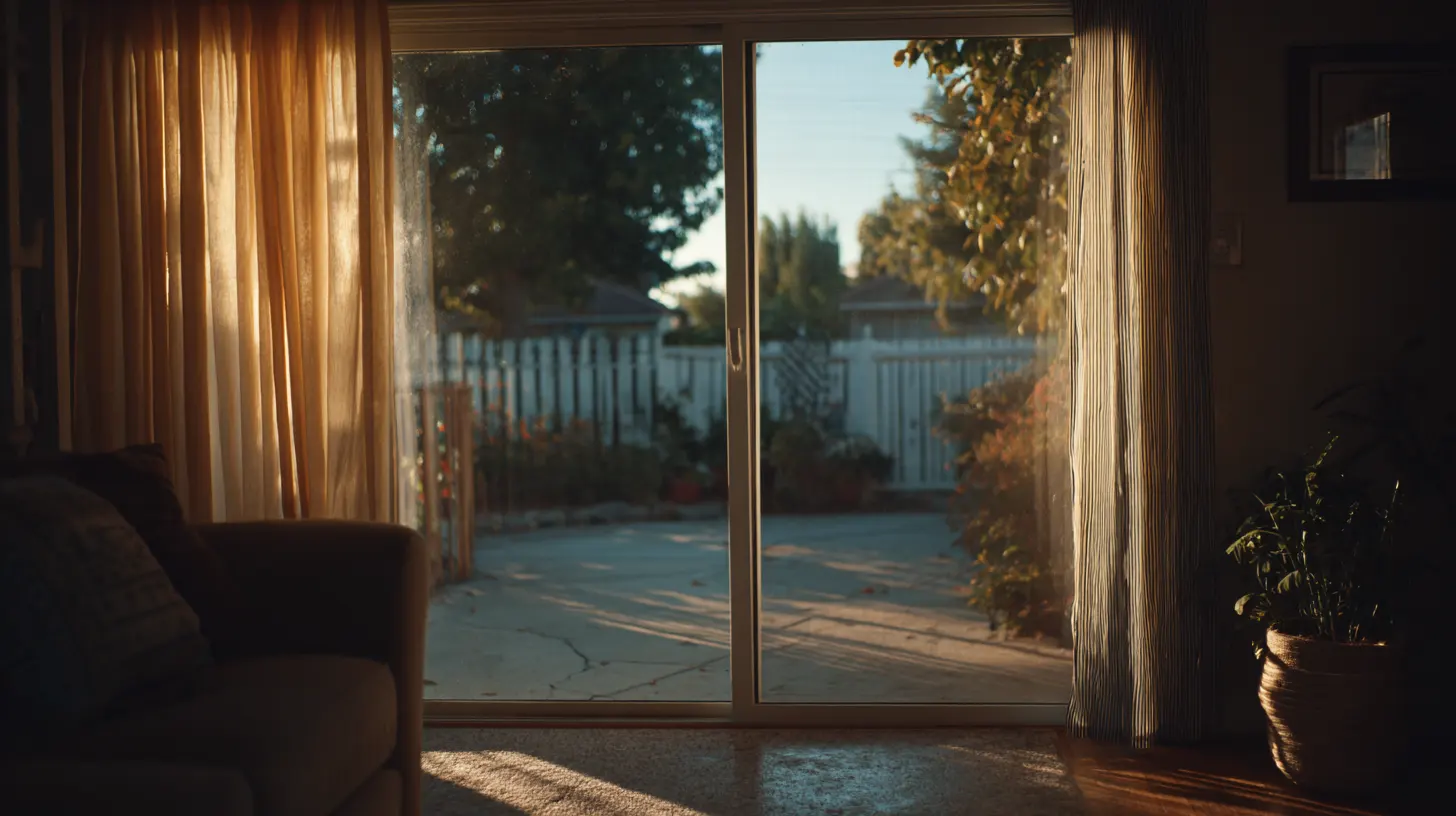
Sliding glass doors are the biggest contradiction in residential construction. They exist because people want light, views, and easy access to the backyard. They're also, mechanically, the least secure commonly installed exterior opening in any home. The standard factory latch is a hook that drops into a receiver — it can be defeated with a firm jiggle, a flathead screwdriver, or by simply lifting the door off its track. Depending on the model and the decade it was installed, the attack surface is embarrassingly large.
And yet most of the "how to secure a sliding door" content on the internet is written by security camera companies telling you to buy cameras and alarm companies telling you to buy alarms. The actual mechanical vulnerabilities — the three distinct ways someone walks through your slider without permission — rarely get addressed with any specificity.
This guide is different. We're going to show you exactly what's wrong with your door, explain why, and then fix it in layers — starting at $0 and going up from there. If you've already read our Try The Window deep cut, you know the sliding door section was the scariest part. This is the full version.
9%
Of burglaries enter through a sliding door
~5s
To defeat a standard factory latch
$35
To properly secure most sliders
Before you fix anything, you need to understand what you're fixing. Sliding glass doors have three distinct vulnerabilities, and most security advice only addresses one of them. Every layer of security you add should target at least one of these attack vectors. If your entire defense is a bar in the track, you've addressed one out of three.
Attack 1: The Latch
The standard factory latch on a sliding glass door is not a lock. It's a hook — a small metal piece that drops into a receiver when you flip the lever. It holds the door closed against wind and keeps toddlers from wandering outside. It was never designed to resist forced entry. A firm lateral shove can pop many latches. Older models can be opened from the outside by inserting a thin tool between the door and frame and lifting the hook. On some models, the latch mechanism is visible through the gap between the sliding and fixed panels, making it trivially easy to manipulate.
This is the attack vector most people think about when they think about sliding door security, and it's actually the easiest one to fix. A secondary lock — a foot bolt, a Charley bar, a track lock — makes the latch irrelevant. If the door can't slide, the latch doesn't matter.
Attack 2: The Lift
This is the one people don't know about. Sliding doors sit on rollers in a bottom track, and they were installed by lifting them up, tilting them into the track, and letting them drop onto the rollers. A burglar reverses this process: push up on the door, tilt the bottom out, and the entire panel comes free. It's quiet, it's fast, and it leaves the latch completely intact — because you didn't defeat the latch, you removed the entire door.
Older doors with shallow tracks are especially vulnerable. If there's more than about ¼ inch of play when you push upward on the closed door, it can likely be lifted out. Anti-lift pins, screws in the upper track, or a purpose-built anti-lift device solve this, and they cost almost nothing. But almost nobody installs them because almost nobody knows this attack exists.
Attack 3: The Glass
The most obvious and least common of the three, because it's noisy and leaves evidence. Standard tempered glass — which is what's in most sliding doors — shatters into small granular chunks when struck in a corner with a centre punch or a spark plug fragment. The entire panel disintegrates. The break is loud but brief — a single sharp crack, not sustained noise. In a neighborhood where people sleep with fans running, the sound window might be smaller than you think.
Tempered glass shattering into small, blunt pieces is a safety feature — but from a security perspective, it's actually worse than float glass because the fragments don't create a dangerous barrier. An intruder can step right through the opening. Security film and laminated glass are the countermeasures here, and they're effective — but they're also the most expensive layer, which is why we tackle the cheap stuff first.
⚠️ The Real Problem
Most sliding door "security" products only address one attack vector. A security bar stops the slide but does nothing about the lift or the glass. A glass break sensor detects the glass but doesn't prevent entry through the latch or the lift. Real security requires layering — one product per attack vector, minimum.
The cheapest and most effective first move. If the door physically cannot slide open, the factory latch is irrelevant. Here are your options, ranked from free to about $40.
-
1
A Wooden Dowel or Cut Broomstick
Cut a piece of wood — a 1-inch dowel, a broomstick, a length of closet rod — to fit snugly in the bottom track when the door is closed. This is the oldest sliding door security trick in existence, and it works. The door cannot slide open because there's a physical obstruction in the track. The downsides: it's not elegant, it can roll out of position, and you have to bend down to place and remove it every time. But it costs $0 and it works immediately.
Cost: $0 — $5
-
2
Security Bar (Adjustable)
A proper security bar is a telescoping metal bar that fits in the track, with rubber end caps to grip the door and frame. The Master Lock 265DCCSEN is the standard recommendation — it's adjustable, fits most tracks, and costs about $15. It's essentially the professional version of the broomstick. Some models mount at handle height instead of in the track, which is more convenient for daily use.
Cost: $12 — $25
-
3
Track Lock (Bolt-Style)
A small bolt-action lock that mounts directly on the track and physically blocks the door from sliding. These are more permanent than a bar, less visible, and can be locked in multiple positions — so you can secure the door while leaving it cracked a few inches for ventilation. The Toledo TDP02S is a solid option. This is what we'd actually recommend for most people: it's low-profile, easy to operate, and doesn't require bending down to the floor track.
Cost: $15 — $35
-
4
Foot-Operated Floor Lock
A foot bolt mounts on the floor and engages a hole drilled into the bottom rail of the sliding door. You operate it with your foot — flip it up to lock, flip it down to unlock. It's unobtrusive, fast, and extremely hard to defeat from outside. The downside is that it requires drilling into your floor and the door rail, so it's a more committed installation. Ideal for homeowners. Renters should stick with a security bar or track lock.
Cost: $10 — $20
✓ Our Pick For Most People
A track lock at handle height for daily convenience, plus a wooden dowel in the floor track as backup when you're away from home for extended periods. Two layers, two physical blockers, under $20 total. The track lock handles the daily in-and-out; the dowel adds a second obstruction that isn't visible from outside and can't be manipulated through the glass.
Advertisement
If a security bar stops the door from sliding, the next move for an intruder is to lift the door out of the track entirely. This bypasses every track-level security product you've installed. The fix is dead simple, nearly free, and takes about five minutes.
Anti-Lift Screws (the 30-second fix)
Drive two or three #8 or #10 sheet metal screws into the upper track of the door frame, directly above the sliding panel. Leave the screws protruding just enough to reduce the clearance between the top of the door and the upper track to less than ¼ inch. The door still slides freely left and right, but it can no longer be lifted high enough to clear the bottom track.
This is the single highest-value security fix per dollar in this entire guide. You need a drill, a measuring tape, and two screws you probably already own. The total cost is functionally zero. And yet almost nobody does it, because nobody knows the lift attack exists.
Security Pins (Charley Pins)
Drill a hole through the inside frame of the sliding panel and into (but not through) the fixed panel's frame where they overlap when the door is closed. Insert a hardened steel pin — a nail works in a pinch, but a purpose-made patio door pin is better. The pin physically connects the sliding and fixed panels together, preventing both sliding and lifting. To open the door, you pull the pin out. It's low-tech, low-cost, and extremely effective. Some people install two holes — one with the door closed, one with the door open a few inches for ventilation — so they can pin the door in a cracked-open position.
⚡ The $0 Anti-Lift Test
Go to your sliding door right now. Close it, latch it, and try pushing the door upward from the inside. If it moves more than ¼ inch, it can be lifted off the track from the outside. That's your answer. If it fails this test, install anti-lift screws today — it takes less time than reading this paragraph took.
This is the expensive layer — and also the one you might not need if Layers 1 and 2 are solid. Most burglars won't break glass unless they're confident no one is around to hear it. But if your sliding door faces a secluded backyard, a wooded lot, or backs onto an alley, glass protection moves higher up the priority list.
Security Film
A clear adhesive film applied to the interior surface of the glass. When the glass breaks, the film holds the fragments together — like a car windshield. The glass shatters but stays in the frame, forcing an intruder to tear through the film to create an opening. Good security film (8-mil minimum) adds 30–60 seconds to the entry time, which is often enough to deter an opportunistic break-in. Cost is roughly $2–$4 per square foot for the film, plus $150–$300 for professional installation on a standard patio door.
DIY installation is possible but tricky on large panels. Bubbles, wrinkles, and lifted edges reduce effectiveness. For a sliding door panel, we'd recommend professional installation unless you have experience with vinyl wraps or tint work.
Laminated Glass (Replacement)
The permanent solution. Laminated glass has a plastic interlayer bonded between two panes — it's the glass in car windshields and hurricane-rated windows. It doesn't just crack and hold; it requires sustained, forceful attack to penetrate. Replacement cost for a standard patio sliding door panel runs $400–$1,200+ depending on size and source. This is a homeowner investment, not a renter solution. But if you're already replacing a door or building new, specifying laminated glass adds relatively modest cost versus doing it as a retrofit.
Polycarbonate Panel (Budget Alternative)
A clear polycarbonate sheet mounted on the interior side of the glass creates a second barrier without replacing the glass itself. Polycarbonate is nearly impossible to shatter — it's what bulletproof glass is made from. A ¼-inch polycarbonate sheet costs $30–$60 for a standard patio door panel and can be mounted with simple hardware. It won't be invisible — there will be a slight gap between the glass and the polycarbonate — but it's far cheaper than laminated glass and dramatically more effective than film alone.
Detection doesn't prevent entry — it detects it. That's an important distinction. A glass break sensor won't stop someone from breaking the glass. But it will trigger an alarm, alert you, and create noise that most burglars don't want. Detection layers work best when paired with physical delays: security film buys time, and the sensor fills that time with consequences.
Door Contact Sensor
A two-piece magnetic sensor — one on the door, one on the frame. When the door slides open, the magnets separate and the sensor triggers. This catches Attack 1 (the slide) but won't detect Attack 2 (the lift, since the door frame stays in place) or Attack 3 (the glass). Simple, cheap ($10–$20), and should be on every sliding door regardless of what else you've installed.
Glass Break Sensor
Acoustic sensors that detect the specific sound frequency of breaking glass. Position within 15 feet of the door in an open room for best results. Look for dual-technology sensors that require both the impact vibration and the acoustic signature — they dramatically reduce false alarms from dropped dishes or slammed cabinets. Worth the extra $5–$10 over basic acoustic-only models.
Motion-Activated Exterior Light
A bright motion-triggered light covering the patio area is one of the most effective deterrents per dollar. Burglars scope targets before they strike, and a dark patio that suddenly floods with light is uncomfortable. Solar-powered LED floods are $15–$30 and require zero wiring. Not a lock, not a sensor — but it changes the risk calculation for anyone approaching your slider at night.
✓ The Complete $35 Setup
Track lock ($15) + anti-lift screws ($0) + door contact sensor ($12) + wooden dowel ($0) = three attack vectors addressed, two layers of physical security, one layer of detection, total cost under $35. This is the baseline. Everything beyond this is bonus. If you do nothing else from this guide, do this.
A sliding glass door is a window. A very large window. If someone standing on your patio can see your TV, your laptop, your gaming setup, and the layout of your home — they're making a decision. Not about whether to break in, but about whether it's worth the risk. Reduce visibility and you reduce targeting.
This doesn't mean you need to live behind blackout curtains. Vertical blinds, sheer curtains that obscure detail while letting in light, or one-way mirror film (which lets you see out while blocking the view from outside during daylight) all achieve the goal without turning your living room into a bunker. The point isn't to hide — it's to remove the ability to case the interior from the exterior.
At night, the physics reverse: a lit room with an unobstructed glass door is a display case. Anyone in the dark backyard can see everything clearly while remaining invisible to you. Close the blinds when the lights come on. That's it. That's the entire Layer 5.
The Bottom Line
Your Slider Is Not a Door. It's a Wall With a Suggestion.
The factory latch on your sliding glass door was designed to keep the door closed, not to keep people out. Every single attack vector we've described in this guide — the slide, the lift, the glass — exploits a design choice made for convenience and cost, not for security. The good news is that fixing all three is cheap, fast, and doesn't require a contractor.
Start with the $0 fixes: anti-lift screws and a wooden dowel. Add a track lock for daily convenience. Add a contact sensor for detection. That's three layers of defense, three attack vectors addressed, and a total cost under $35. If your slider faces a secluded area, add security film. If you're a homeowner with budget, specify laminated glass when you eventually replace the door.
The most important thing? Do the anti-lift screws. Right now. Go find a drill and two screws. It takes thirty seconds and it closes the attack vector that nobody talks about. Everything else in this guide is gravy — that one fix is the meal.
For the rest of your perimeter, see our Try The Window deep cut, and check the NoPryZone Home Security Setup for the full room-by-room walkthrough.
