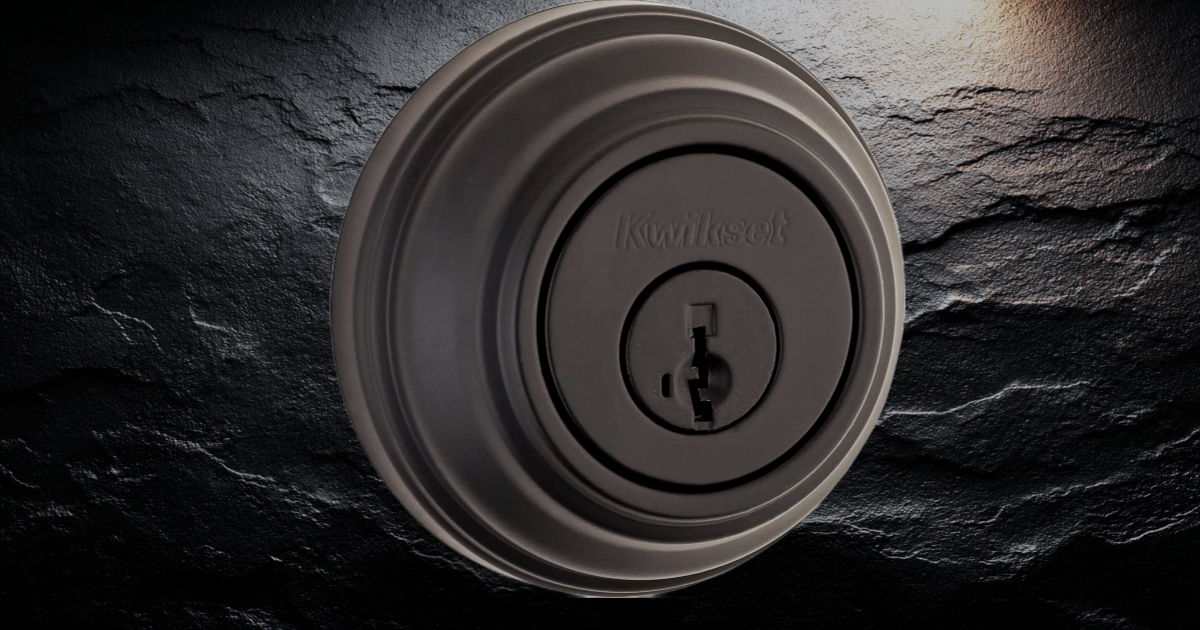
Walk into any Home Depot or Lowe's and the Kwikset SmartKey 980 is right there at eye level, usually on sale, usually with a sticker promising "Advanced Security" or "SmartKey Technology." It's on millions of American front doors. It's the go-to deadbolt upgrade for homeowners who want re-keying convenience without calling a locksmith. It looks serious, it's priced right, and the SmartKey re-keying feature is genuinely one of the smarter ideas in residential hardware.
So why does it score a 4.8? Because looking serious and being serious are two different things — and the gap between them is exactly what a motivated intruder is counting on.
What SmartKey Actually Is (And Why It Doesn't Help)
Let's give credit where it's due. SmartKey is a genuinely useful feature. Instead of calling a locksmith every time you move into a new place or lose a key, you insert your current working key, use the SmartKey tool, insert the new key, and the lock re-keys itself in about 15 seconds. No disassembly, no tools, no $80 locksmith visit. For renters, landlords, and anyone who's ever stood outside their own house wondering who else has a copy, that's real value.
The problem is that SmartKey isn't a security upgrade — it's a convenience feature grafted onto a standard pin-tumbler cylinder. The re-keying mechanism works by replacing the wafer system that holds the pins in place. And that wafer system, it turns out, is also the thing that makes the lock trivially easy to bypass in a way that has nothing to do with picking.
The same mechanism that lets you re-key the lock in 15 seconds with a small tool also lets someone else open it in about the same time with a slightly different small tool — or even a stripped key blank and a screwdriver.
The Forcing Attack: What We Found
The most documented vulnerability on SmartKey locks isn't picking — it's a forcing attack. A short key blank (or even a piece of metal the right profile) is inserted into the keyway with lateral force applied. Under enough pressure, the wafer system that holds the SmartKey mechanism together can be manipulated or defeated, and the plug rotates. There's footage of this taking under 30 seconds by people who clearly aren't professional locksmiths.
We replicated it. We won't detail the exact technique here because this is a how-to for homeowners, not a bypass tutorial — but we confirmed it works consistently across multiple copies of the lock. Not every attempt succeeds on the first try. Some copies were more resistant than others. But none of them stopped us permanently, and none required specialized tools.
.
Kwikset has acknowledged this class of attack over the years and made incremental improvements to the SmartKey mechanism. Newer production runs are somewhat more resistant than older ones. But the fundamental architecture of the system — a wafer that can be displaced under lateral force — hasn't changed, and independent testers keep finding it.
Standard Pin Picking: Also Not Great
Setting aside the SmartKey vulnerability entirely and just evaluating the cylinder as a pin-tumbler lock, the SmartKey 980 is average at best. It ships with ANSI Grade 1 certification — which sounds impressive until you realize Grade 1 is based on bolt strength and cycle testing, not pick resistance. The pin stack includes some security pins depending on the key bitting, but the tolerances are loose enough that raking is genuinely fast.
We consistently opened test copies with a Bogota rake in under a minute. Single pin picking with a short hook took longer but was never particularly challenging. For context, a Schlage B60N — which costs about the same or slightly less — has tighter tolerances, better security pins, and is noticeably more resistant to the same attacks. There's no reason to choose the SmartKey 980 on security grounds alone.
The feature that makes this lock easy to re-key also makes it easier to bypass than a standard deadbolt. That tradeoff might be acceptable for a storage unit or interior door. It is not acceptable for a front door you're counting on to keep someone out.
Where It's Not All Bad
The SmartKey 980's bolt and strike plate setup is actually solid for the price. The deadbolt throw is a full 1 inch, the bolt itself is hardened steel, and the included strike plate — if you actually use the longer screws, which most installers don't — provides decent kick resistance. The physical bolt is not the weak link here. It never is on deadbolts. The cylinder is where the problem lives.
Build quality on the body and trim is reasonable. It looks good, the finish holds up, and the mechanism operates smoothly. As a piece of hardware it feels substantial in a way that $45 locks sometimes don't. Kwikset also backs it with a lifetime mechanical guarantee and a limited finish warranty, which is more than most competitors offer at this price.
If SmartKey convenience matters to you and you accept its limitations — meaning you understand this lock will slow down an opportunistic thief but won't stop a prepared one — then the SmartKey 980 is fine. A lot of households fall into that category. The threat model for most suburban homes is smash-and-grab or door-kick, not methodical bypass attacks. For that threat model, a deadbolt that looks serious and throws a solid bolt does most of the job.
The Spec Sheet
| Category | Kwikset SmartKey 980 |
|---|---|
| ANSI Grade | Grade 1 |
| Mechanism | Pin-tumbler with SmartKey wafer |
| Pick Resistance | Below average for price |
| SmartKey Bypass | Documented, replicable |
| Deadbolt Throw | 1 inch hardened steel |
| Kick Resistance | Good (with correct screws) |
| Re-keying | DIY in ~15 seconds |
| Warranty | Lifetime mechanical |
| Price | ~$55–$75 |
| NoPryZone Score | 4.8 / 10 |
| Better Alternative | Schlage B60N (~same price, Grade 1) |
Clever Engineering, Wrong Priorities
Kwikset solved a real problem with SmartKey. Re-keying a lock without a locksmith is genuinely useful and the mechanism is elegantly designed. But in solving that problem, they introduced a vulnerability that sits directly in the cylinder of a product that millions of people trust to secure their homes — and they've never really fixed it.
The SmartKey 980 isn't a bad product. It's a mismarketed one. Sold honestly as a convenience-focused mid-tier deadbolt with a known bypass vulnerability, it would find its audience. Sold as "Advanced Security" in the deadbolt aisle of every big-box store in America, it's setting people up to feel safe when they maybe shouldn't.
For a front door: spend the same money on a Schlage B60N. For a back gate, shed, or rental unit where SmartKey convenience genuinely matters and the threat model is lower: the SmartKey 980 does the job. Know which one you're buying.