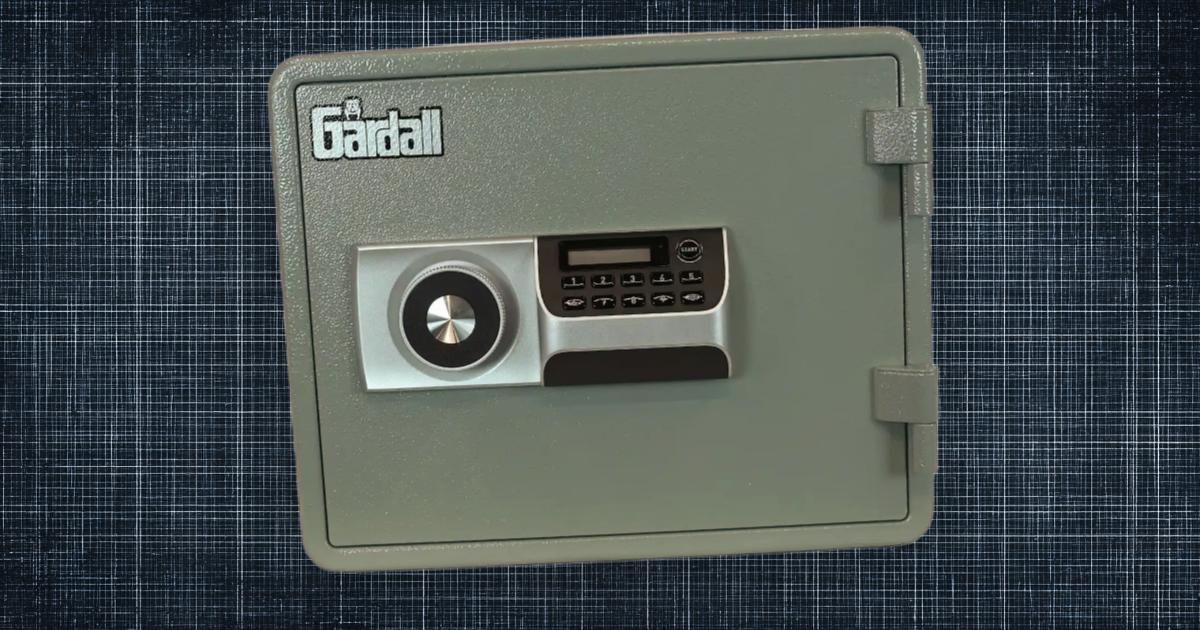
Gardall is the brand you've never heard of unless you've talked to a locksmith, a safe technician, or someone who works in commercial security. They've been building safes since 1950, and their product line includes bank depositories, jeweler vaults, pharmacy safes, and the kind of commercial-grade boxes that insurance companies approve for high-value contents. The MS912 is the smallest safe in their lineup — a compact, 85-lb unit that looks like a microwave oven and costs between $255 and $465 depending on the lock configuration. It's not flashy. It doesn't have interior lighting or a door tray. What it has is engineering that the big-box brands don't match at any price.
If the SentrySafe SFW205GQC is the Honda Civic of home safes — reliable, popular, good enough — the Gardall MS912 is the Lexus. Same basic function. Dramatically better construction. The question is whether the difference is worth $200 to you.
The Build: Where the Money Goes
Pick up a SentrySafe and a Gardall side by side and you'll feel the difference immediately. The SentrySafe feels like steel wrapped around insulation — because it is. The Gardall feels like steel. Period. The door is extra-heavy-gauge steel, noticeably thicker than anything you'll find at Home Depot. The body is precision-built with tongue-and-groove closure on all four sides — meaning the door seats into the body with interlocking ridges that prevent prying, even if someone gets a tool into the seam.
The interlocking bolts extend into the walls of the safe body, not just the door frame. This is a fundamental difference from the SentrySafe, where the bolts engage with a steel frame that's bonded to composite material. In the Gardall, the bolts engage with solid steel. You can't peel the composite away to bypass the bolts because there isn't composite to peel — it's steel all the way.
The fire protection is the same rating — UL 1-hour at 1700°F with interior below 350°F — but the Gardall adds impact resistance testing, meaning it survived being dropped during the fire test. The fire insulation in the Gardall is sandwiched between heavy steel layers, not bonded to a thin steel skin. The result is a safe that maintains structural integrity after fire exposure better than composite-construction alternatives.
The difference between a SentrySafe and a Gardall is the difference between a safe-shaped box and a box-shaped safe. One is built around fire insulation. The other is built around steel. You can feel it the moment you pick them up.
The Lock Options
The MS912 comes in two configurations: the MS912-E with a programmable electronic lock, and the MS912-K with a key lock. The electronic lock (E model) is the one most people should buy — it allows a programmable code, doesn't require carrying a key, and is the standard for modern residential safes. The key lock (K model) is simpler and has no batteries to die, but it means carrying and securing a physical key, which introduces its own security considerations.
Neither lock option is high-security in the commercial safe sense — these are consumer-grade locks appropriate for a residential fire safe. But they're a step above what you find on SentrySafe products, with tighter tolerances and better construction. The electronic lock includes a lockout after multiple failed attempts, which is standard but still worth noting.
The Size Tradeoff
Here's the honest conversation: the MS912 holds 0.72 cubic feet. The SentrySafe SFW205GQC holds 2.05 cubic feet. That's nearly three times the capacity for about $200 less. If you need to store a large volume of documents, a handgun, boxes of ammunition, photo albums, and assorted valuables, the Gardall physically cannot do it. The interior is 9.5" H × 12.75" W × 10.25" D — it fits letter-size documents flat and has a pull-out shelf, but there's no room for anything tall or bulky.
This is the intended use case: a small number of high-value items that need serious protection. Think passports, a Rolex, a stack of emergency cash, a small jewelry collection, critical legal documents, and maybe a compact handgun. If you're trying to protect everything you own, the Gardall isn't the right shape. If you're trying to protect a few irreplaceable things extremely well, it's the right choice.
UL 1-hour fire at 1700°F with impact resistance. Extra-heavy-gauge steel door — noticeably thicker than consumer safes. Tongue-and-groove closure on all sides — eliminates pry points. 2 live-locking interlocking door bolts that extend into steel walls. Center bolt-down hole with hardware included. Pull-out shelf for organization. Powder-coated finish. Available in electronic lock (E) or key lock (K). Made in the USA by Gardall. 85 lbs — compact but serious. Fits letter-size documents flat. From a manufacturer that builds bank vaults.
The Limitations
No waterproof rating. The Gardall MS912 is a fire safe, not a fire-and-water safe. If your house floods, the contents are at risk. This is a meaningful gap compared to the SentrySafe SFW205GQC (24-hour waterproof) and the Honeywell 1114G (100-hour waterproof). For most fire scenarios this isn't an issue, but if you live in a flood-prone area, it's a factor.
The 0.72 cu. ft. capacity is small. There's no getting around this — it's a compact safe. The pull-out shelf helps organize the interior, but you're working with about the interior volume of a microwave oven. For some people, that's exactly right. For others, it's not enough.
The price range of $255 to $465 puts it significantly above the SentrySafe SFW205GQC ($200–$280), despite holding a third of the volume. You're paying for construction quality, not capacity. That's a value proposition that appeals to some buyers and not others.
No waterproof rating — fire only, no flood protection. 0.72 cu. ft. capacity — about one-third of the SentrySafe SFW205GQC. Price is $200+ more than comparable-rated consumer safes. Only 2 locking bolts (vs. 6 on the SentrySafe) — though they engage solid steel. No interior lighting, no door tray, no door pocket. Heavier per cubic foot than consumer safes — harder to position. Limited retail availability — usually purchased through locksmiths or specialty dealers. Not a burglary-rated safe — still primarily a fire safe, just a very well-built one.
The Spec Sheet
| Category | Gardall MS912 |
|---|---|
| Fire Rating | UL 1 hr at 1700°F + impact |
| Water Rating | None |
| Capacity | 0.72 cu. ft. |
| Interior | 9.5" H × 12.75" W × 10.25" D |
| Exterior | 13.5" H × 16.75" W × 15.25" D |
| Weight | 85 lbs |
| Lock | Electronic (E) or Key (K) |
| Bolts | 2 interlocking, into steel walls |
| Construction | Heavy-gauge steel, tongue-and-groove |
| Bolt-Down | Yes — center hole, hardware included |
| Origin | USA (Gardall) |
| Price | ~$255–$465 |
| NoPryZone Score | 7.5 / 10 |
The Safe for People Who Know What Good Looks Like
The Gardall MS912 is not the safe most people buy. It's the safe most people should buy if they have the budget and a small number of high-value items to protect. The construction quality is in a different league from anything on a Home Depot shelf. The tongue-and-groove closure, the heavy-gauge steel door, the interlocking bolts into steel walls — these are details that matter when a fire reaches your closet or a burglar reaches your bedroom.
It's compact. It has no waterproof rating. It costs more per cubic foot than the SentrySafe alternative. All true. But if you're protecting your passport, your grandmother's jewelry, an emergency cash reserve, and a small stack of irreplaceable documents, the MS912 does that job with the kind of engineering that a company with 70+ years of vault-building experience puts into everything they make. Bolt it down, set your code, and stop thinking about it. That's the Gardall experience.