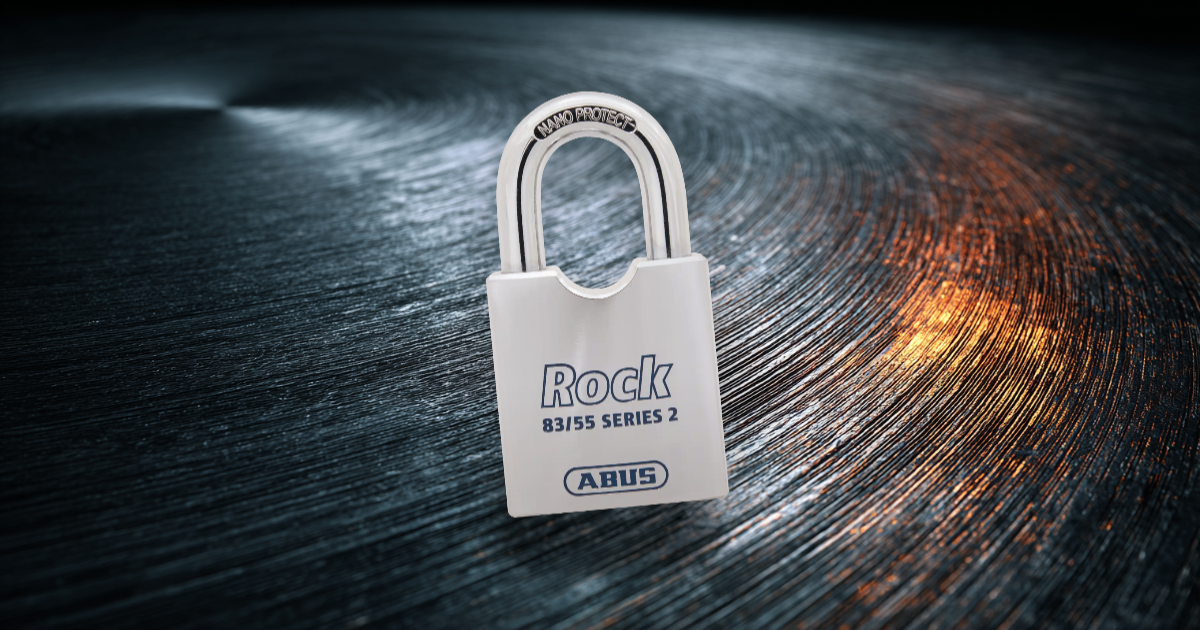
Ask a locksmith what padlock they'd put on their own warehouse and you'll hear the same answer more often than you'd expect: the ABUS 83/55. Not the Abloy. Not the Mul-T-Lock. The 83/55. And the reason isn't that it's the most secure padlock in the world — it's that it's the most flexible one. It's a hardened steel shell that accepts interchangeable cylinders from nearly every major keyway on the market, which means it can be as secure as a basic Kwikset or as fortified as a restricted Medeco, depending entirely on what you put inside it.
That's a fundamentally different philosophy than every other padlock on this site. The Abloy Protec2 is one lock with one mechanism. The ABUS 55/40 is one lock with one cylinder. The 83/55 is a body — a platform — and reviewing it means reviewing the idea as much as the hardware.
The Body: What You're Paying For
Let's start with the shell itself, because that's what the 83/55 actually is — the most overbuilt padlock body at its price point. The entire thing is hardened steel, chrome plated with ABUS's Nano Protect coating for corrosion resistance. The shackle is special hardened alloy steel, also Nano Protect treated. ABUS rates this at Security Level 8 or 9 depending on the configuration, and it carries a CEN 3 rating — a European security certification that confirms independently tested resistance to cutting, drilling, and sawing.
The locking mechanism uses a double ball-bearing system, which is a step above the pin-and-lever arrangement you get on cheaper padlocks. Ball bearings resist pulling and prying attacks better because they distribute force across the shackle instead of concentrating it at a single point. The closed-shackle variant (83CS/55) adds a shackle guard that physically blocks bolt cutters from reaching the shackle at all — if you're buying this for a gate or container in a high-theft area, that's the one you want.
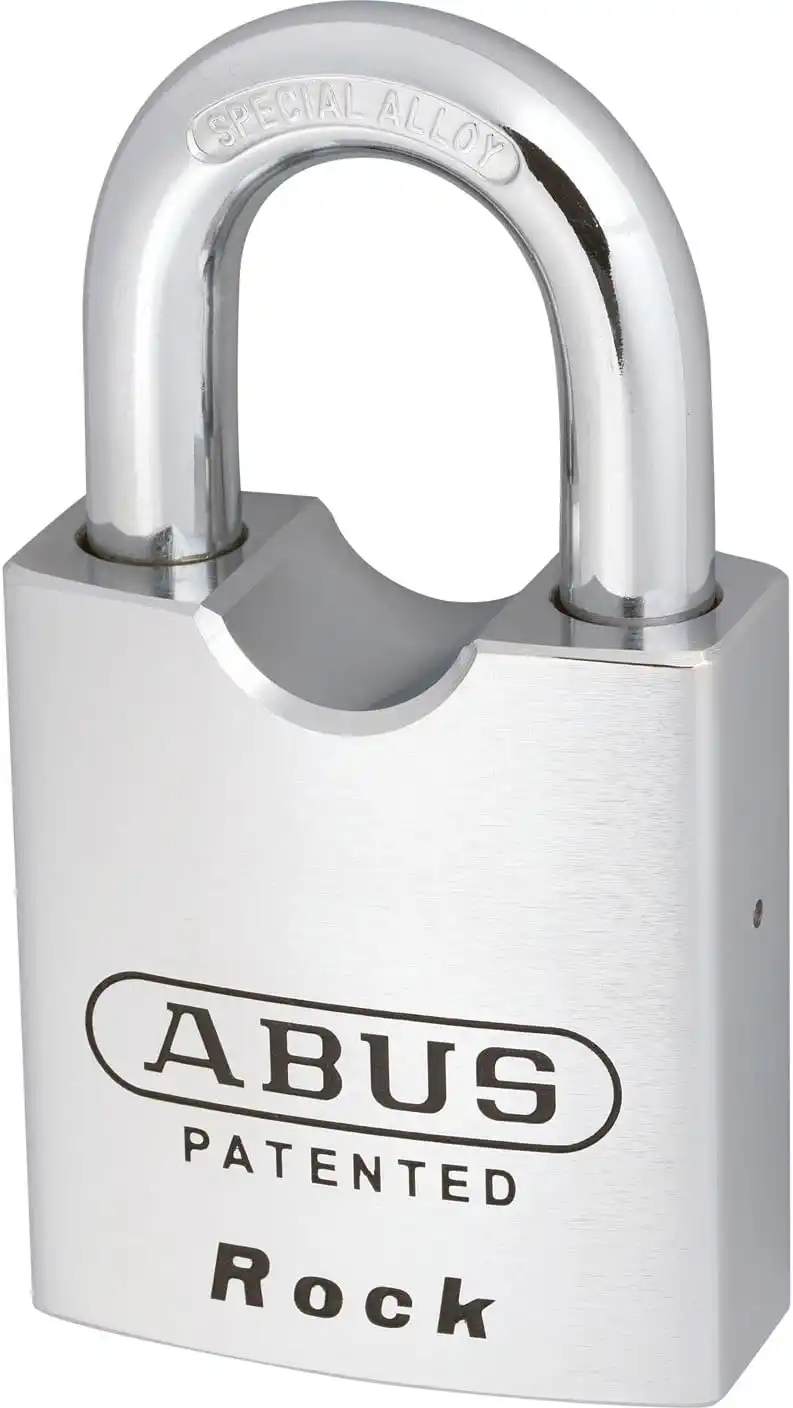
Nano Protect isn't marketing fluff — this coating genuinely keeps the shackle functional in outdoor environments where cheaper locks seize up.
The Z-Bar: A Small Thing That Changes Everything
ABUS patented a feature called the Z-Bar that sounds boring until you realize how much time it saves. It's a small bolt you insert into the back of the cylinder that toggles between two modes: key-retaining (the lock only closes when you turn the key — so you can't accidentally lock yourself out) and auto-locking (push the shackle down and it clicks shut without the key, like a normal padlock).
Switching between modes takes about three seconds. No tools. No disassembly. Just slide the Z-Bar in or out. If you're managing a fleet of these locks across a commercial site — some on gates that employees walk through all day, others on storage containers that should only lock when deliberate — this is the kind of detail that makes the 83/55 worth its premium over simpler padlocks.
The 83/55 doesn't have a security rating the way most locks do. It has a security ceiling — and that ceiling is determined entirely by the cylinder you choose to install.
The Cylinder System: Where It Gets Interesting
This is the whole point. The 83/55 body accepts removable cylinders in a wide range of keyways. Out of the box, it typically ships "zero-bitted" — meaning the cylinder has no real cuts and needs to be keyed by a locksmith or swapped entirely. The available keyways include Schlage C, Kwikset KW1, Yale, BEST, American Lock, and several ABUS-proprietary options including the high-security EC550, EC660, and XP20S.
What this means in practice: say you're a property manager with 15 buildings, all keyed on Schlage. You buy fifteen 83/55 bodies with Schlage C cylinders, key them all alike, and now one key opens every gate, shed, and storage closet on the property. Then one tenant moves out and you need to rekey a single location. You don't replace the padlock — you pop out the cylinder, repin it using ABUS's patented pinning window (literally takes seconds without removing the core from the body), and you're done.
Or say you want to upgrade security on a few high-value locations. Drop in an ABUS XP20S cylinder with restricted keys, and now those specific locks require key authorization to duplicate — while the rest of your fleet stays on the standard Schlage keyway. Same padlock body. Different security levels. No new hardware.
Interchangeable cylinders in Schlage, Kwikset, Yale, BEST, and ABUS keyways. Rekey in seconds through the patented pinning window. Mix security levels across a single keying system. Z-Bar toggle for key-retaining or auto-locking. Closed-shackle variant available. Can be integrated into any existing commercial key system without replacing door hardware.
Physical Attack Resistance
The body itself is serious. CEN 3 means it passed standardized European testing for saw resistance, drill resistance, and bolt cutter resistance. The Sold Secure Silver rating (UK) confirms the same from a different testing body. The hardened alloy shackle at 11mm diameter is significantly beefier than what you'll find on a consumer padlock — for context, the ABUS 55/40's shackle is 6mm. Almost double the thickness makes a dramatic difference against cutting tools.
Drill resistance is built in. The cylinder area has hardened inserts that deflect drill bits, and the ball-bearing locking mechanism doesn't have the exposed components that simpler locks expose to attack. You could spend a very frustrating afternoon trying to drill through this thing and likely ruin your bits before you get anywhere useful.
Pick resistance depends entirely on the cylinder — the body doesn't help here. A basic Schlage C cylinder is pickable by intermediate hobbyists. Zero-bitted units ship without functional keys and need a locksmith to set up. Not cheap — the body alone runs $50–$70 before you've even chosen a cylinder. Overkill for residential use unless you have specific keying requirements. Heavy.
Who Actually Needs This Lock
The 83/55 is purpose-built for commercial and institutional use. If any of these describe your situation, this is probably your lock: you manage multiple padlocked locations and need them on the same key system. You need to rekey individual locks without replacing hardware. You want to integrate padlocks into an existing Schlage, Kwikset, or Yale door key system. You need CEN-rated physical security for insurance or compliance. You're securing gates, containers, warehouses, trailers, or industrial equipment.
If you just need one padlock for a garden shed, this is like buying a commercial espresso machine to make one cup of coffee. It'll do it beautifully, but you're paying for capability you'll never use. Grab the Diskus 20/70 or even the 55/40 instead and save yourself $40.
The Spec Sheet
| Category | ABUS 83/55 Rock |
|---|---|
| Body Material | Hardened steel, chrome + Nano Protect |
| Shackle | Special hardened alloy, 11mm, Nano Protect |
| Locking | Double ball-bearing mechanism |
| Cylinder | Interchangeable — Schlage, Kwikset, Yale, BEST, ABUS |
| Rekeyable | Yes — patented pinning window, seconds to rekey |
| Z-Bar | Patented — toggle key-retaining / auto-locking |
| CEN Rating | CEN 3 |
| Sold Secure | Silver |
| ABUS Security Level | 8–9 |
| SCEC Approved | SL3 (Australian Gov't) |
| Closed Shackle Option | Yes (83CS/55) |
| Price | ~$50–$70 (body, zero-bitted) |
| NoPryZone Score | 8.0 / 10 |
Buy the Body Once. Upgrade the Guts Forever.
The ABUS 83/55 isn't the most secure padlock you can buy. With a basic Schlage cylinder, it's a very well-built but ultimately pickable lock. But that misses the point entirely. The 83/55 is the padlock body you buy once and never replace — because when you need more security, you swap the cylinder. When you need to rekey, you pop the pinning window. When you need to match it to a new key system, you drop in a different core.
No other padlock at this price does that. The hardened steel body, CEN 3 rating, Nano Protect coating, and ball-bearing locking mechanism are just the foundation. The real value is the flexibility to make this lock exactly as secure as your situation requires, and to change that level whenever your situation changes.
There's a reason locksmiths reach for this one. It solves the problem once.